Climate And Its Changes
WHAT IS CLIMATE?
- Climate isn't the same thing as weather.
- Weather is the condition of the atmosphere over a short period of time; climate is the average course of weather conditions for a particular location over a period of many years.
- One of the factors that influences climate is the angle of the sun's rays. Types of Climate
- Summer Season

- Rainy Season


Summer Season
In the northern hemisphere, summer is the warmest season of the year; extending from the summer solstice through to the autumnal equinox. This season introduces the raining season, because of the heat, water is evaporated and the vapours are safely stored in the atmosphere, in turn these vapours are turned into clouds that fall as rain for four months.

Summer is especially warm because during this time that part of the earth is directly under the sun and its rays are focused on the area, drying up ponds and lakes; this has/can lead to a scarcity of water. For most people this time of the year is associated with fun as schools break on holidays and most offices are not fully active.
Summer brings back lots of outdoor social activities impossible in the freezing cold winter. Most people visit picnics, beaches and parks to relax and unwind themselves under clear skies. For the party rockers, summer time is ‘open season’ so many parties are held to take advantage of the fine weather ,with clear skies the summer hosts a very bright moon, ideal for this purpose.
Rainy Season
Rain, when we hear these words in summer, brings cheer and gives relaxation to the mind and heart. It refreshes us but also reminds us of the problems that we face during the rainy days.
The cool, wet and pleasant days have finally arrived. The continuous, nonstop, heavy rain, outside, is amazing. What fun, it’s raining! And when it rains my heart fills with joy?
Even a peacock dances, when it rains, so, how can people be left behind! Small children play in the muddy water, they also make paper boats and enjoy by making a fun game out of it. A rainbow in the sky, after the rain, adds to their thrill and excitement.
To avoid getting wet, the school going children and other people can be seen running with umbrellas and raincoats. People also enjoy the rain by staying indoors, listening to the pitter patter of the rain, relishing hot tea, pakodas and jalebis while peeping outside from their windows or sitting in their balconies and verandahs.

There is no doubt rain gives us a cool weather but messy, chaotic roads. The streets are full with muddy water and people are struck in traffic jams due to water logging. The result of these traffic jams is that children get late for school, people reach office late and at times due to undue haste, traffic congestion and low visibility accidents happen, too.
Sometimes the water level is so high that it is even difficult to drive, leave alone walk. The worst effect of heavy rain is that some areas get badly flooded; many farmers lose their earnings because their crops are destroyed. In rural areas, the houses/hutments near the rivers are washed away.
Mosquitoes start breeding on the surface of stagnant puddles, causing diseases like malaria and dengue etc. So, one has to take preventive measures, also, like not walking on wet grass and in muddy water.
Winter Season
Winter Season in India corresponds to months between November and January. With the depart of autumn, the winter bells at our door. The heat of the sun in the winter is less. The day becomes shorter and nights go longer. All the time a wind from the North blows. The dew drops are seen in the morning. The early morning remain dark white with dew drops.

During Winter Season, the leaves from the trees shed. Many kinds of vegetable are available. That is why the prices are less in the market. Fruits are also available in abundance. Winter is free from diseases. In this season one can work more than any season. The poor suffers much because they cannot afford to purchase warm clothes due to financial instability. Cholera sometimes break out in this season.
How The Climates Are Changing
Earth's climate is changing. Multiple lines of evidence show changes in our weather, oceans, ecosystems, and more.
Natural causes alone cannot explain all of these changes. Human activities are contributing to climate change, primarily by releasing billions of tons of carbon dioxide (CO2) and other heat-trapping gases, known as greenhouse gases, into the atmosphere every year.
Climate changes will continue into the future. The more greenhouse gases we emit, the larger future climate changes will be.

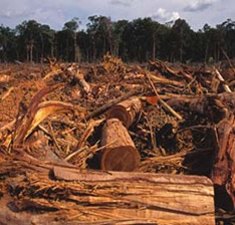
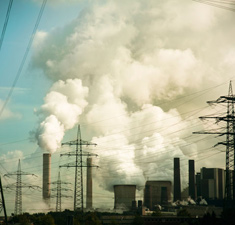
Human activities, like driving, manufacturing, electricity generation, and the clearing of forests contribute to greenhouse gas emissions and warm the planet.
Changes in the climate system affect our health, environment, and economy. We can prepare for some of the impacts of climate change to reduce their effects on our well-being.
The global average temperature has increased by more than 1.5°F since the late 1800s. Some regions of the world have warmed by more than twice this amount. The buildup of greenhouse gases in our atmosphere and the warming of the planet are responsible for other changes, such as:
Earth's climate is changing
- Changing temperature and precipitation patterns
- Increases in ocean temperatures, sea level, and acidity
- Melting of glaciers and sea ice
- Changes in the frequency, intensity, and duration of extreme weather events
- Shifts in ecosystem characteristics, like the length of the growing season, timing of flower blooms, and migration of birds
- Increasing threats to human health
The indicators of climate change.
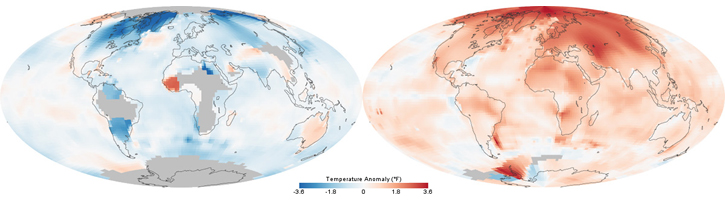
These maps show temperatures across the world in the 1880s (left) and the 1980s (right). Blue colors represent cooler temperatures compared with the average temperatures from 1951 to 1980, and red colors represent warmer temperatures compared to this average. The map on the left shows that it was colder in the 1880s in most places. The map on the right shows it was warmer in the 1980s in most places. Earth's average surface temperature has increased by more than 1.5°F since the 1880s. Two-thirds of the warming has occurred since 1975, at a rate of roughly 0.3°F-0.4°F per decade.
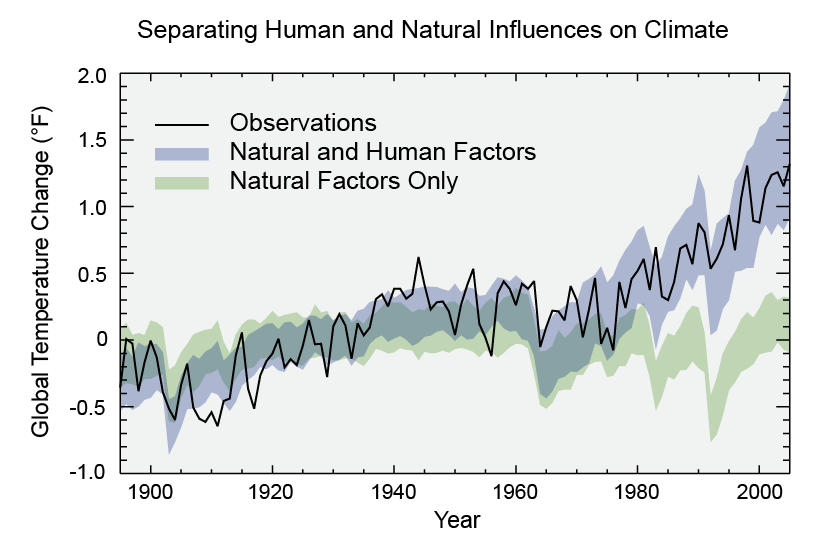
Natural causes alone cannot explain recent changes
View enlarged image
Models that account only for the effects of natural processes are not able to explain the warming observed over the past century. Models that also account for the greenhouse gases emitted by humans are able to explain this warming.
Models that account only for the effects of natural processes are not able to explain the warming observed over the past century. Models that also account for the greenhouse gases emitted by humans are able to explain this warming.
View enlarged image
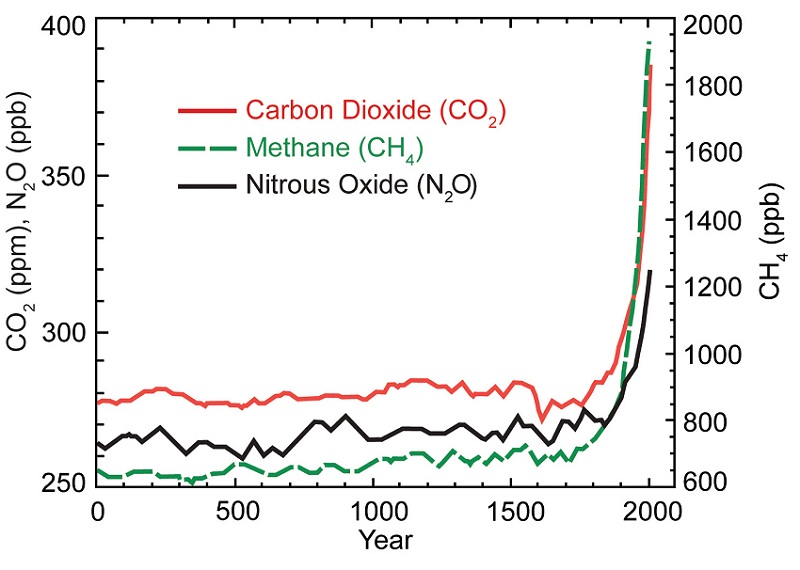
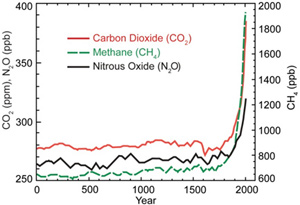
This graph shows the increase in greenhouse gas (GHG) concentrations in the atmosphere over the last 2,000 years. Increases in concentrations of these gases since 1750 are due to human activities in the industrial era. Concentration units are parts per million (ppm) or parts per billion (ppb), indicating the number of molecules of the greenhouse gas per million or billion molecules of air.
This graph shows the increase in greenhouse gas (GHG) concentrations in the atmosphere over the last 2,000 years. Increases in concentrations of these gases since 1750 are due to human activities in the industrial era. Concentration units are parts per million (ppm) or parts per billion (ppb), indicating the number of molecules of the greenhouse gas per million or billion molecules of air.
Natural processes such as changes in the sun's energy, shifts in ocean currents, and others affect Earth's climate. However, they do not explain the warming that we have observed over the last half-century.
Human causes can explain these changes
Most of the warming of the past half century has been caused by human emissions of greenhouse gases.Greenhouse gases come from a variety of human activities, including: burning fossil fuels for heat and energy, clearing forests, fertilizing crops, storing waste in landfills, raising livestock, and producing some kinds of industrial products.
Greenhouse gas emissions are not the only way that people can change the climate. Activities such as agriculture or road construction can change the reflectivity of Earth's surface, leading to local warming or cooling. This effect is observed in urban centers, which are often warmer than surrounding, less populated areas. Emissions of small particles, known as aerosols, into the air can also lead to reflection or absorption of the sun's energy.
Climate will continue to change, but the extent of the change will depend on how much, and how quickly, we can reduce greenhouse gas emissions.
During the 21st century, global warming is projected to continue and climate changes are likely to intensify. Scientists have used climate models to project different aspects of future climate, including temperature, precipitation, snow and ice, ocean level, and ocean acidity. Depending on future emissions of greenhouse gases and how the climate responds, average global temperatures are projected to increase worldwide by 0.5°F to 8.6°F by 2100, with a likely increase of at least 2.0°F for all scenarios except the one representing the most aggressive mitigation of greenhouse gas emissions. [2] Learn more about the projections of future climate change.
Climate change impacts our health, environment, and economy
Climate change affects our environment and natural resources, and impacts our way of life in many ways. For example:
- Warmer temperatures increase the frequency, intensity, and duration of heat waves, which can pose health risks, particularly for young children and the elderly.
- Climate change can also impact human health by worsening air and water quality, increasing the spread of certain diseases, and altering the frequency or intensity of extreme weather events.
- Rising sea levels threaten coastal communities and ecosystems.
- Changes in the patterns and amount of rainfall, as well as changes in the timing and amount of stream flow, can affect water supplies and water quality and the production of hydroelectricity.
- Changing ecosystems influence geographic ranges of many plant and animal species and the timing of their life cycle events, such as migration and reproduction.
- Increases in the frequency and intensity of extreme weather events, such as heat waves, droughts, and floods, can increase losses to property, cause costly disruptions to society, and reduce the availability and affordability of insurance.
We can prepare for some of the likely climate change impacts to reduce their effect on ecosystems and human well-being. Making such preparations is known as adaptation. Examples of adaptation include strengthening water conservation programs, upgrading storm water systems, developing early warning systems for extreme heat events, and preparing for stronger storms through better emergency preparation and response strategies.